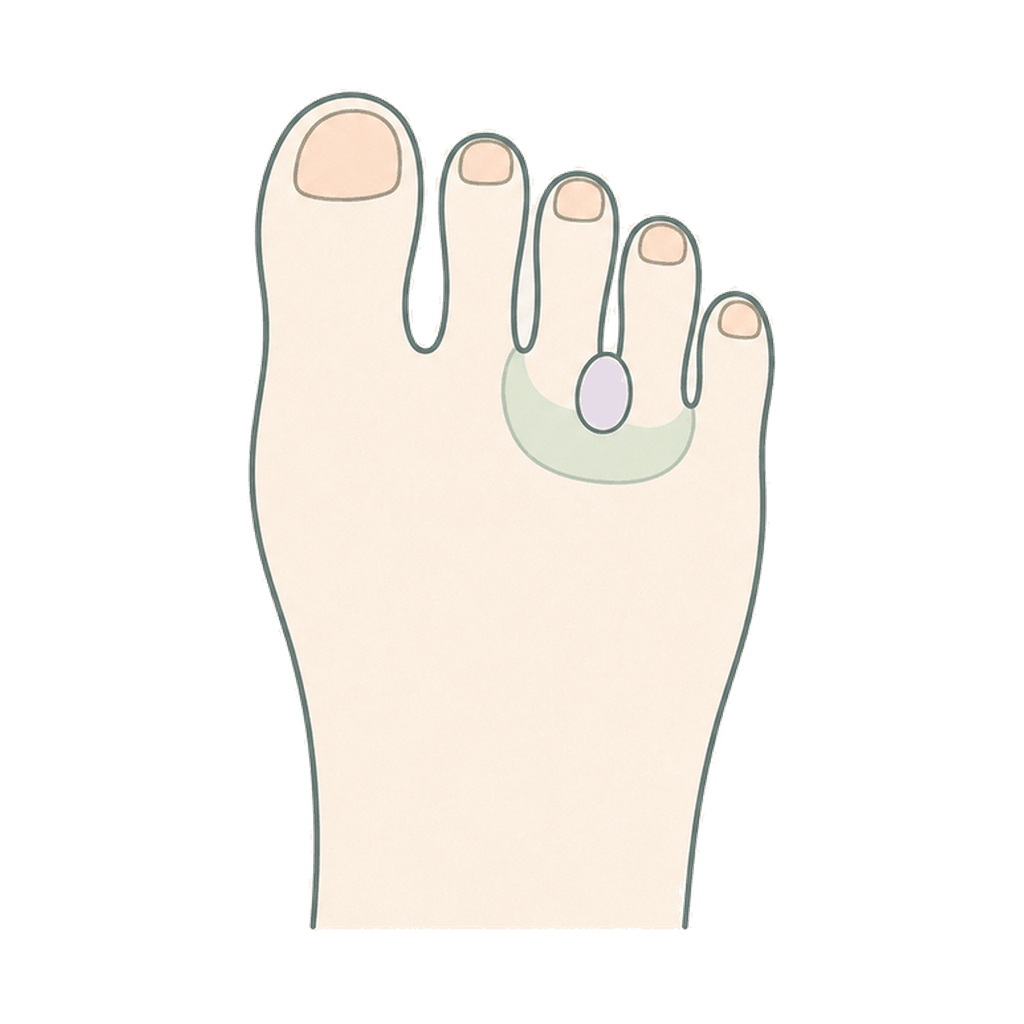
Morton's Neuroma: natural remedies and the evidence behind them
Morton's neuroma is a painful thickening of nerve tissue between the toes, most often between the third and fourth toes, causing burning, numbness, or a…
5 options1 graded B1 graded C3 traditional or ungraded
B
Guided condition explorer
Start with what sounds familiar.
Choose what sounds familiar, then choose the kind of support you want to explore. HealisticMD narrows the library without presenting the result as personal medical advice.
Since you've moved past shoe changes and padding and are weighing in-clinic procedures, this is one option a clinician can offer for your forefoot pain -- but it's worth knowing how it compared to the standard steroid injection before you choose.
In a head-to-head trial for Morton's neuroma, an ultrasound-guided hyaluronic acid injection did reduce pain, but a standard corticosteroid injection worked better through the first six months, with the two evening out by twelve months. It is a practitioner-delivered procedure, and an oral or over-the-counter hyaluronic acid supplement cannot reproduce it.
Dose or use Delivered only as an ultrasound-guided injection by a qualified clinician. Oral or over-the-counter hyaluronic acid supplements have not been shown to help Morton's neuroma.
Key study RCT (2024, PMID 39348919) compared ultrasound-guided hyaluronic acid infiltration with corticosteroid for Morton's neuroma: corticosteroid gave significantly greater pain and function improvement at one to six months, the two converged by twelve months, and no patient required surgery -- so the trial shows hyaluronic acid was inferior, not superior.
EvidenceSupported by smaller clinical studiesTime to resultsPain and function are typically reassessed over the first one to six months after the injection.
Caution: This is a medical injection procedure that must be performed by a trained practitioner; it is not a self-care supplement. Ask whether a corticosteroid injection may be the more effective first choice.
Since the burning and tingling is what bothers you most, a cream you apply right over the sore spot on the ball of your foot can target that nerve pain where you feel it.
Capsaicin, the compound that makes chili peppers hot, binds to TRPV1 receptors on pain nerves and, with repeated use, quiets them so they send fewer pain signals. In a placebo-controlled trial, a single clinician-administered capsaicin injection reduced Morton's neuroma foot pain over four weeks — encouraging evidence that this particular nerve pain can respond to capsaicin. The over-the-counter cream uses the same idea in a gentler, self-applied form, though the cream itself has not been trialed for Morton's neuroma.
Dose or use Apply a thin layer of over-the-counter capsaicin cream to the painful area a few times a day as directed on the label.
Key study Randomized Controlled Trial (2016, PMID 26963851): a double-blind, placebo-controlled trial in 58 people with Morton's neuroma found that a single 0.1 mg capsaicin injection into the painful area reduced foot pain at 1 and 4 weeks versus placebo. This supports capsaicin's action on this nerve, but the injection is a clinician-delivered procedure — over-the-counter capsaicin cream has not itself been tested for Morton's neuroma.
EvidenceCenturies of traditional use · Limited human trials so farTime to resultsOften a few days to a couple of weeks of regular use before the desensitizing effect builds.Traditional useLong-standing traditional staple
Caution: Expect a warm or burning sensation at first. Do not apply to broken skin, keep it away from eyes and nose, and wash your hands thoroughly after each use.
Evidence grade not assigned · Traditional use long-standing
Acupressure point on the top of the foot
Why it may be relevant
Since you'd like something hands-on you can do yourself, this acupressure point sits right on the top of your foot, close to where Morton's neuroma pain tends to live.
LV3 (Taichong) is a traditional acupressure point on the top of the foot between the first and second toes, used in Traditional Chinese Medicine to ease tension and support local circulation. Its use for Morton's neuroma is traditional rather than trial-proven, but it is a free, low-risk technique you can try at home.
Dose or use Press firmly with your thumb on the point between the first and second toes on the top of the foot for one to two minutes, breathing slowly, and repeat a few times a day.
Key study A traditional acupressure point used for foot tension and circulation; its use for Morton's neuroma is based on tradition and has not been confirmed in controlled clinical trials.
EvidenceCenturies of traditional use · Human evidence not yet assessedTime to resultsAny relief is usually felt in the moment or across repeated sessions; there is no fixed timeline.Traditional useLong-standing traditional staple
Caution: Avoid firm pressure over broken or inflamed skin, and stop if it sharply increases your pain. Acupressure supports comfort -- it does not fix the underlying nerve thickening.
What's bothering you most about your Morton's neuroma, and how would you rather tackle it?
The burning, tingling or 'pebble in my shoe' feeling — I want to calm that nerve pain down
Since the burning and tingling is what bothers you most, a cream you apply right over the sore spot on the ball of your foot can target that nerve pain where you feel it.
Capsaicin, the compound that makes chili peppers hot, binds to TRPV1 receptors on pain nerves and, with repeated use, quiets them so they send fewer pain signals. In a placebo-controlled trial, a single clinician-administered capsaicin injection reduced Morton's neuroma foot pain over four weeks — encouraging evidence that this particular nerve pain can respond to capsaicin. The over-the-counter cream uses the same idea in a gentler, self-applied form, though the cream itself has not been trialed for Morton's neuroma.
Dose or use Apply a thin layer of over-the-counter capsaicin cream to the painful area a few times a day as directed on the label.
Key study Randomized Controlled Trial (2016, PMID 26963851): a double-blind, placebo-controlled trial in 58 people with Morton's neuroma found that a single 0.1 mg capsaicin injection into the painful area reduced foot pain at 1 and 4 weeks versus placebo. This supports capsaicin's action on this nerve, but the injection is a clinician-delivered procedure — over-the-counter capsaicin cream has not itself been tested for Morton's neuroma.
EvidenceCenturies of traditional use · Limited human trials so farTime to resultsOften a few days to a couple of weeks of regular use before the desensitizing effect builds.Traditional useLong-standing traditional staple
Caution: Expect a warm or burning sensation at first. Do not apply to broken skin, keep it away from eyes and nose, and wash your hands thoroughly after each use.
Evidence grade not assigned · Traditional use long-standing
Antioxidant studied for nerve pain and numbness
Why it may be relevant
Because burning, tingling and numbness are what trouble you most, ALA is an oral antioxidant aimed at the nerve-irritation side of those symptoms.
Alpha-lipoic acid is an antioxidant shown in trials to reduce pain, tingling and numbness in diabetic nerve damage. Morton's neuroma is a different, compression-based nerve problem, so that evidence does not transfer directly and its benefit here has not been confirmed -- but it is a low-risk option for the nerve-symptom side of things.
Dose or use Taken orally as a daily supplement; follow the dose on the product label.
Key study Clinical trials support ALA for diabetic neuropathy symptoms such as pain, tingling and numbness; its benefit specifically for Morton's neuroma has not been established in controlled trials.
EvidenceCenturies of traditional use · Human evidence not yet assessedTime to resultsNerve-symptom changes are typically judged over several weeks to a couple of months.Traditional useLong-standing traditional staple
Caution: May slightly lower blood sugar -- take care if you are diabetic or on glucose-lowering medication, and check with your doctor first.
Evidence grade not assigned · Traditional use long-standing
Oral option aimed at calming irritated nerves
Why it may be relevant
If the nerve pain itself is your main problem, PEA is an oral option meant to quiet the over-active pain and inflammation signaling in an irritated nerve.
PEA is a fatty-acid compound your body makes in response to pain; it is thought to calm mast cells and support nerve signaling. Its documented uses include neuropathic pain and carpal tunnel syndrome, a compression neuropathy much like Morton's neuroma. It has not been tested specifically for Morton's neuroma in controlled trials, so it is a reasonable nerve-support option rather than a proven treatment.
Dose or use Taken orally as a supplement; follow the dose on the product you choose and give it a consistent trial.
Key study Documented for neuropathic and compression-nerve pain, including carpal tunnel syndrome; no controlled trials confirm its use specifically for Morton's neuroma.
EvidenceCenturies of traditional use · Human evidence not yet assessedTime to resultsNerve-pain benefits, if they come, usually build over several weeks of daily use.Traditional useLong-standing traditional staple
Caution: Generally well tolerated; check with your pharmacist or doctor if you take other medicines or are pregnant or breastfeeding.
Evidence grade not assigned · Traditional use long-standing
Antioxidant studied for nerve pain and numbness
Why it may be relevant
Because burning, tingling and numbness are what trouble you most, ALA is an oral antioxidant aimed at the nerve-irritation side of those symptoms.
Alpha-lipoic acid is an antioxidant shown in trials to reduce pain, tingling and numbness in diabetic nerve damage. Morton's neuroma is a different, compression-based nerve problem, so that evidence does not transfer directly and its benefit here has not been confirmed -- but it is a low-risk option for the nerve-symptom side of things.
Dose or use Taken orally as a daily supplement; follow the dose on the product label.
Key study Clinical trials support ALA for diabetic neuropathy symptoms such as pain, tingling and numbness; its benefit specifically for Morton's neuroma has not been established in controlled trials.
EvidenceCenturies of traditional use · Human evidence not yet assessedTime to resultsNerve-symptom changes are typically judged over several weeks to a couple of months.Traditional useLong-standing traditional staple
Caution: May slightly lower blood sugar -- take care if you are diabetic or on glucose-lowering medication, and check with your doctor first.
Evidence grade not assigned · Traditional use long-standing
Oral option aimed at calming irritated nerves
Why it may be relevant
If the nerve pain itself is your main problem, PEA is an oral option meant to quiet the over-active pain and inflammation signaling in an irritated nerve.
PEA is a fatty-acid compound your body makes in response to pain; it is thought to calm mast cells and support nerve signaling. Its documented uses include neuropathic pain and carpal tunnel syndrome, a compression neuropathy much like Morton's neuroma. It has not been tested specifically for Morton's neuroma in controlled trials, so it is a reasonable nerve-support option rather than a proven treatment.
Dose or use Taken orally as a supplement; follow the dose on the product you choose and give it a consistent trial.
Key study Documented for neuropathic and compression-nerve pain, including carpal tunnel syndrome; no controlled trials confirm its use specifically for Morton's neuroma.
EvidenceCenturies of traditional use · Human evidence not yet assessedTime to resultsNerve-pain benefits, if they come, usually build over several weeks of daily use.Traditional useLong-standing traditional staple
Caution: Generally well tolerated; check with your pharmacist or doctor if you take other medicines or are pregnant or breastfeeding.
Evidence grades describe the strength of published research for Morton's Neuroma, not a promise of results. A higher grade is not a personal recommendation. Nothing here is medical advice — talk to your clinician before starting anything, especially alongside prescription medication.
Related pressure points
Hands-on options you can try yourself.
Acupressure is a comfort measure, not a treatment for Morton's Neuroma itself. Each page shows where the point is and how to press it.
We track 4 natural options for Morton's Neuroma — what each is typically used for, usual dose, cautions, and the study behind the ones with real trial data.
One email with the summary. We'll also send a short weekly evidence update — unsubscribe any time.
Build your plan in the app
Build and track your natural-health plan for Morton's Neuroma in the app.